Whey Concentrate vs Whey Isolate: Which Protein Is Better for Your Goals?
powergenx6 · 5 Aug 2026
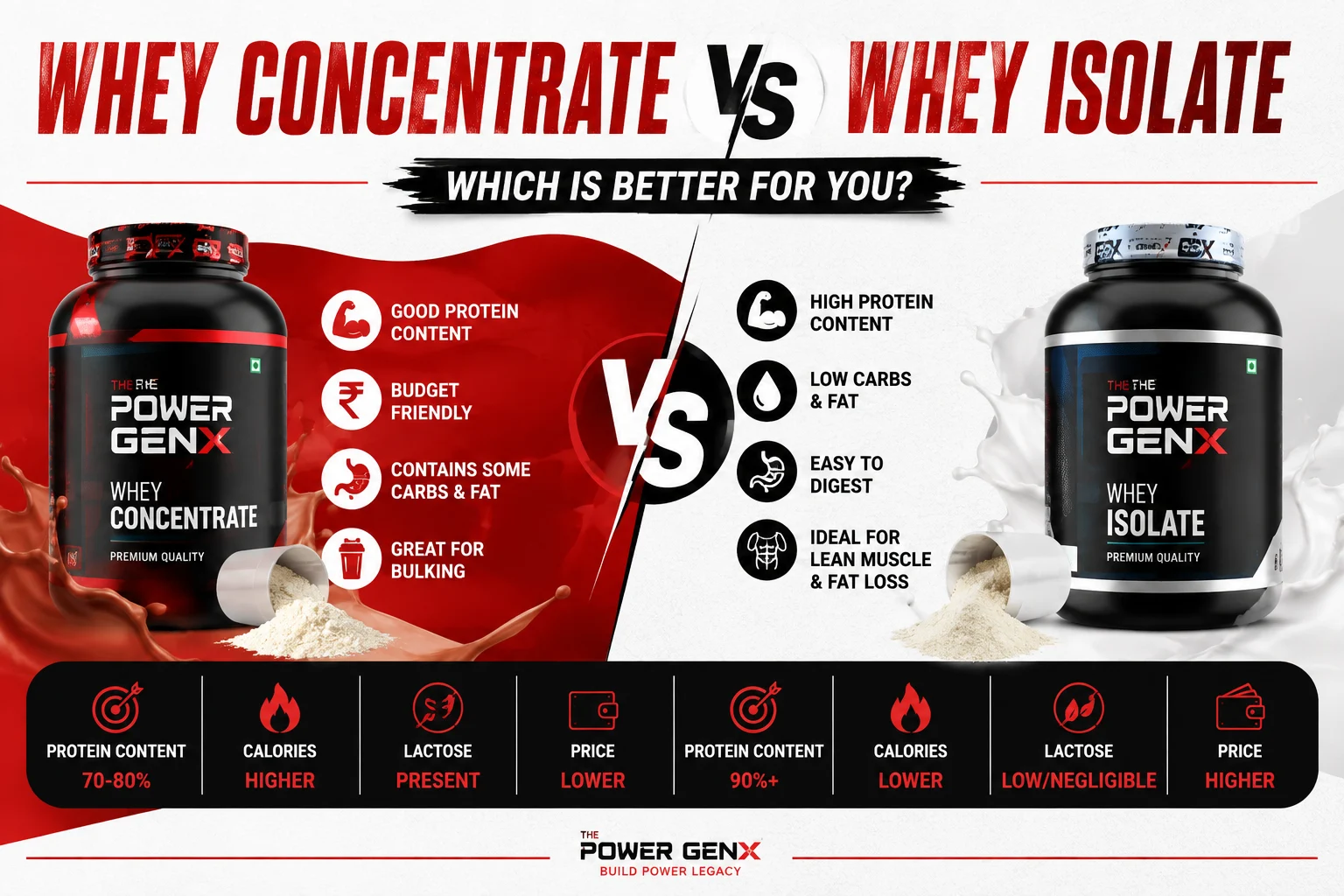
If you feel stuck choosing between whey concentrate and whey isolate, you’re not alone. Walk into any supplement store and you’ll see dozens of tubs all promising “lean muscle” and “quick recovery” but very few explain in simple words which type of whey is actually right for your goals. This guide breaks it down in easy language so you can stop guessing, stop wasting money, and confidently pick the protein that fits your body and your budget.
What Is Whey Protein and Why Does It Matter?
Whey protein comes from milk. When cheese is made, the liquid part that separates from the curd is called whey. That liquid is dried and filtered to create whey protein powder.
Whey is popular because:
- It provides high‑quality protein.
- It is rich in essential amino acids, especially leucine, which helps trigger muscle growth.
- It is fast‑digesting, so it is great after workouts for recovery.
Two main types you see on labels are whey concentrate and whey isolate. They come from the same source, but are processed differently and that changes their nutrition, cost, and best use.
Whey Concentrate vs Whey Isolate: Simple Definitions
Whey Concentrate
- Typically around 70–80% protein by weight.
- The remaining 20–30% is carbs, fats, and bioactive compounds from milk.
- It goes through basic filtration, then is dried into powder less processing overall.
In simple terms: whey concentrate is a slightly more “natural” form with some milk sugars (lactose) and a bit of fat left in. It often tastes creamier and is usually cheaper than isolate.
Whey Isolate
- Usually 90–95% protein by weight.
- Extra filtration removes most lactose, carbs, and fats.
- This creates a leaner powder with more protein per scoop and fewer calories.
In simple terms: whey isolate is a “cleaner” and more filtered form. You get more protein, less lactose, and very little fat or carbs. That’s why isolate is often recommended for cutting, strict macro tracking, or lactose sensitivity but it also costs more.
Nutrition Comparison Table
Here’s a simple side‑by‑side look at how whey concentrate and isolate usually differ (values are typical, not exact for every brand):
| Factor | Whey Concentrate | Whey Isolate |
| Protein by weight | ~70–80% | ~90–95% |
| Protein per 30 g scoop | ~21–24 g | ~26–28 g |
| Carbohydrates per scoop | ~3–5 g | ~0–2 g |
| Fat per scoop | ~1.5–3 g | ~0.5–1 g |
| Lactose | Small amount (2–5 g possible) | Very low (<1 g) |
| Calories per serving | Slightly higher | Slightly lower |
| Processing level | Basic filtration | Extra filtration, higher purity |
| Taste & texture | Creamier, richer | Lighter, thinner |
| Typical price per serving | Lower | Higher |
| Best fit | Everyday use, bulking, budget | Cutting, lactose sensitivity, strict diet |
This table already hints at an important truth: neither is strictly “better” in every situation. It depends on what you want.
How Processing Changes the Protein
To understand the difference, imagine two filters:
- First filter – removes water and concentrates the protein. This gives you whey concentrate at about 70–80% protein, plus a mix of lactose, fat, and helpful milk compounds.
- Second filter – more advanced filtration like cross‑flow microfiltration or ion‑exchange. This strips out more lactose and fat, leaving a higher‑purity whey isolate at 90–95% protein.
Because of this:
- Isolate is leaner and often digested slightly faster.
- Concentrate keeps more of the natural bioactive compounds such as lactoferrin and immunoglobulins, which may support immunity and gut health.
Think of concentrate as a “whole” protein supplement and isolate as a “refined” version.
Muscle Gain: Does Isolate Build More Muscle?
This is where many people get confused. Isolate sounds stronger because it has more protein per scoop. But research and expert reviews say something important:
When your total daily protein intake is matched, whey concentrate and whey isolate build muscle equally well.
Why?
- Both are complete proteins with all essential amino acids.
- Both are high in leucine, the key amino acid for muscle protein synthesis.
- Your muscles care more about total protein over the whole day than which whey type you use.
So for muscle gain and strength:
- If you can hit your protein targets using a good concentrate, you’ll build muscle just as effectively as with isolate.
- Concentrate often gives more protein per dollar, so it can be smarter for long‑term bulking when budget matters.
Best choice for muscle gain:
- Most healthy people without lactose issues can happily use whey concentrate and get great results.
Fat Loss and Cutting: Does Isolate Have an Edge?
When you are trying to lose fat or get lean, small differences in calories and macros can matter more. Here is where isolate often wins:
- Higher protein, lower carbs and fats per scoop means slightly fewer calories for the same amount of protein.
- This helps keep protein high (to protect muscle) while keeping calories under control.
However, the edge is small, so your overall diet still matters most. If you are tracking macros very closely or preparing for a photoshoot or competition, isolate can make life a bit easier.
Best choice for fat loss:
- If you want maximum protein with minimum extra calories, or you are on a strict cutting plan, whey isolate is often the better fit.
Lactose Intolerance and Digestion
Lactose is a sugar found in milk that many people struggle to digest. Symptoms can include gas, bloating, or stomach discomfort.
The main points:
- Concentrate has more lactose than isolate, although clean products still contain much less than a glass of milk.
- Isolate has most lactose removed and is usually better tolerated for people with lactose intolerance or sensitivity.
If you:
- Get bloating or digestive issues from dairy,
- Or have been told you are lactose‑intolerant,
then whey isolate is generally safer and more comfortable.
Budget, Taste, and Everyday Use
When we look beyond macros, other practical factors matter in real life:
Budget
- Concentrate usually costs 30–50% less per gram of protein than isolate.
- Over months of training, this difference can be huge.
If your budget is tight, concentrate lets you:
- Hit your protein targets
- Spend less money
- Maintain your supplement routine for longer
Taste and Texture
- Concentrate often tastes creamier and richer because of the small amount of fat and lactose.
- Isolate has a thinner texture and can feel lighter.
If you care about taste and enjoy milk‑shake style shakes, you may actually prefer concentrate.
Everyday Use
For most people who:
- Train regularly
- Eat a balanced diet
- Want a convenient protein boost
A good whey concentrate is often the simpler, more complete, and more affordable everyday choice.
Goal‑Based Guide: Which Protein Is Better for Your Goals?
Instead of searching for one “best” protein, match the whey type to your specific goals.
1. Goal: Build Muscle and Strength
- You train hard, want bigger muscles, and mainly care about recovery.
- You are not extremely strict about every calorie.
Best fit:
- Whey concentrate (if you tolerate lactose well).
- Reason: cheaper, still high‑quality protein, retains helpful bioactive compounds, and works just as well as isolate when total daily protein is high enough.
2. Goal: Lose Fat and Stay Lean
- You are cutting calories, watching carbs and fats closely, or want a very lean shake.
Best fit:
- Whey isolate.
- Reason: higher protein density, fewer carbs and fats per scoop, slightly lower calories makes hitting high‑protein, low‑calorie targets easier.
3. Goal: Manage Lactose or Sensitive Digestion
- You often feel bloated or uncomfortable after dairy.
- You know or suspect you are lactose‑intolerant.
Best fit:
- Whey isolate, or a lactose‑free protein.
- Reason: very low lactose, usually gentler on digestion.
4. Goal: Everyday Health and Budget‑Friendly Protein
- You just want a reliable protein source for general health.
- You want to support your muscles and keep your diet balanced without spending too much.
Best fit:
- Whey concentrate.
- Reason: more cost‑effective, great for long‑term use, still high in essential amino acids and leucine.
Simple Decision Table
Use this quick table as a checklist when choosing your next tub:
| Your Main Goal / Situation | Better Choice | Why It Works Well |
| Bulking and muscle gain | Whey concentrate | Cheaper, complete protein, builds muscle equally well when protein intake is high |
| Cutting and fat loss | Whey isolate | Higher protein, lower carbs and fats, easier macro control |
| Lactose intolerance or dairy sensitivity | Whey isolate | Most lactose removed, gentler on digestion |
| Tight budget, long‑term use | Whey concentrate | More protein per dollar, still high quality |
| Very strict diet, physique competitions | Whey isolate | Leanest profile, helps fine‑tune macros |
| Everyday fitness and general wellness | Whey concentrate | Simple, effective, and affordable |
How Much Whey Do You Actually Need?
Remember, whey is a supplement. It supports your diet; it does not replace real food. Most active people aim for:
- Around 1.6–2.2 g of protein per kg of body weight per day for muscle gain (for example, 120–150 g per day for a 70 kg person).
- Whey helps fill the gap when you cannot get enough protein from food like chicken, eggs, fish, tofu, or lentils.
Practical tips:
- Use 1–2 scoops per day, depending on your diet and training.
- Common times: right after workouts, or between meals when you need a quick protein boost.
- Focus on your total daily protein, not just your shake.
SEO‑Friendly FAQs (Great for Google and Readers)
Adding a short FAQ section can help your article rank better and answer common reader questions quickly.
Is whey isolate always better than concentrate?
No. Isolate is better for some situations (cutting, lactose intolerance), but for most healthy people, concentrate gives similar muscle‑building results at a lower cost.
Can beginners use whey concentrate?
Yes. Beginners can safely use whey concentrate. It is often recommended as a first protein powder because it is effective, budget‑friendly, and easy to mix.
Can I mix whey concentrate and isolate?
Yes. Many brands sell blends, and you can also mix them yourself. A blend can offer a good balance between cost, taste, and macro profile.
Is whey protein safe to use every day?
For healthy individuals, whey protein is generally safe as part of a balanced diet. If you have kidney issues or other medical conditions, talk to your doctor before using any supplement regularly.
Final Answer: Which Protein Is Better for Your Goals?
There is no single winner in “Whey Concentrate vs Whey Isolate: Which Protein Is Better for Your Goals?”
- If you want maximum value, great taste, and strong muscle gain, and you tolerate dairy well, whey concentrate is usually the smarter choice.
- If you need very low lactose, tight macro control, and the leanest possible shake, especially during fat loss phases or competitions, whey isolate fits better.
Both are high‑quality proteins that can help you build muscle, recover faster, and reach your fitness goals. The “best” one is simply the one that matches your body, budget, and current training phase.
When you understand these differences, you stop buying supplements based on hype and start choosing them based on what your body actually needs. That’s how you turn a simple scoop of whey into a powerful tool for progress.