How Much Protein Do You Really Need Per Day? (Age & Weight Guide)
powergenx6 · 15 Sep 2026
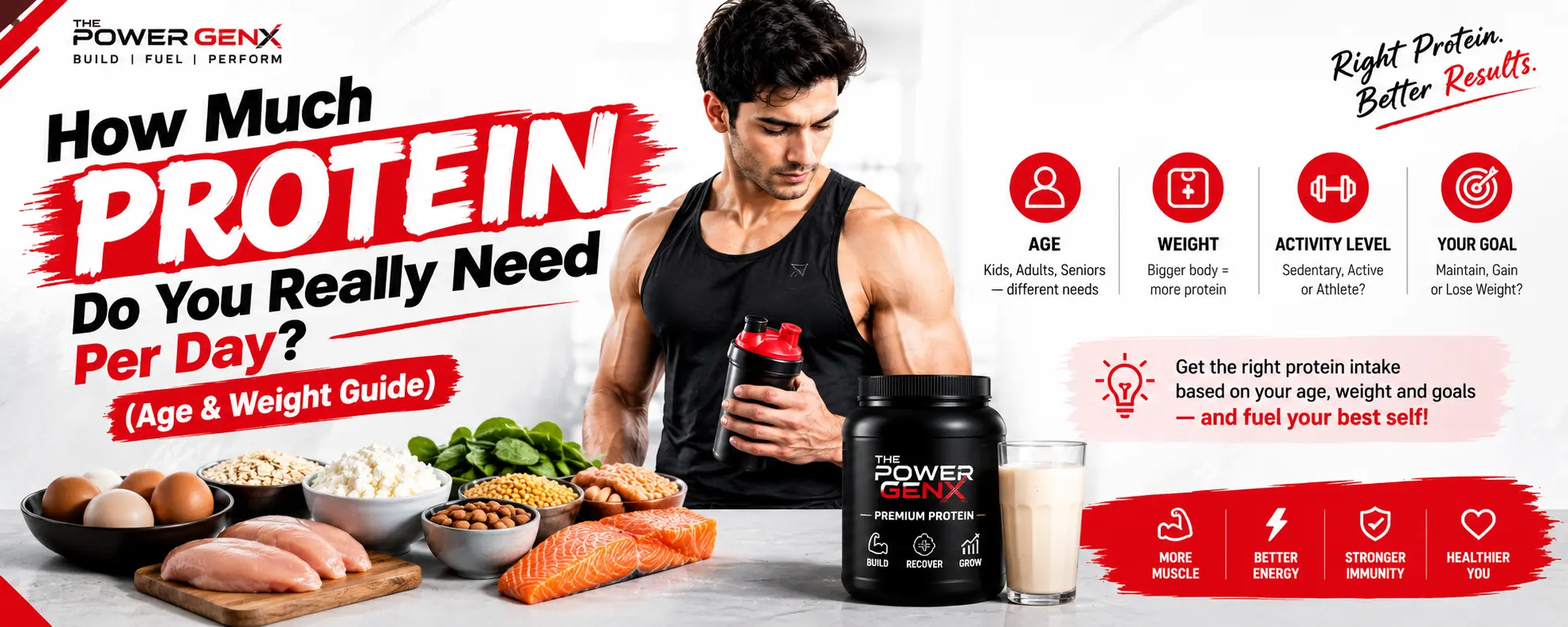
If you’ve ever stood in the supplement aisle wondering whether you need 60 grams of protein a day or 160, you’re not alone. Protein requirements are one of the most searched and most misunderstood topics in fitness and nutrition. The truth is, there’s no single “magic number” that applies to everyone. Your ideal protein intake depends on your age, body weight, activity level, and personal goals.
In this guide, we’ll break down exactly how much protein you need, backed by nutrition science, so you can stop guessing and start fueling your body correctly.
Why Protein Matters So Much
Protein is one of the three macronutrients (along with carbohydrates and fats) that your body needs to function. But unlike carbs and fats, protein plays a unique role: it’s the building block for muscle, skin, hair, enzymes, hormones, and your immune system.
Every day, your body breaks down and rebuilds proteins in a process called protein turnover. If you don’t consume enough protein to support this process, your body starts breaking down muscle tissue to meet its needs which is the opposite of what most of us want, whether our goal is fitness, fat loss, or simply healthy aging.
The General Recommendation (RDA)
The Recommended Dietary Allowance (RDA) set by health authorities is 0.8 grams of protein per kilogram of body weight per day. This is considered the minimum to prevent deficiency in a sedentary adult, not necessarily the optimal amount for good health or fitness goals.
For example:
- A sedentary person weighing 60 kg would need roughly 48 grams of protein per day by RDA standards.
- A sedentary person weighing 80 kg would need roughly 64 grams per day.
However, most nutrition researchers today agree that the RDA is a baseline, not a target especially if you’re physically active, trying to build muscle, lose fat, or over the age of 40.
Protein Needs by Activity Level
Here’s a more practical breakdown based on lifestyle and goals:
| Activity Level | Protein Intake (per kg body weight) |
| Sedentary (little to no exercise) | 0.8 – 1.0 g/kg |
| Moderately active (light exercise 2–3x/week) | 1.0 – 1.3 g/kg |
| Regular gym-goers (strength training) | 1.6 – 2.0 g/kg |
| Athletes / intense training | 1.8 – 2.2 g/kg |
| Fat loss phase (to preserve muscle) | 1.8 – 2.4 g/kg |
Example: A 70 kg person doing regular strength training would need approximately 112–140 grams of protein per day to support muscle repair and growth.
Protein Needs by Age
Protein requirements don’t stay the same throughout life. Here’s how they shift:
Children & Teens (Growth Years)
Growing bodies need more protein relative to their weight to support development. Requirements typically range from 1.0 to 1.5 g/kg, depending on age and activity level.
Adults (18–40 years)
This is where the standard 0.8–2.0 g/kg range applies, depending on activity level as outlined above.
Adults Over 40 (Muscle Preservation)
After 40, the body naturally starts losing muscle mass, a process called sarcopenia. Research increasingly shows that older adults benefit from higher protein intake (1.2–1.6 g/kg), even without intense exercise, simply to slow muscle loss and maintain strength, mobility, and bone health.
Seniors (60+)
For older adults, adequate protein becomes even more critical to prevent frailty and support recovery from illness or injury. Many experts recommend 1.2–2.0 g/kg, especially when combined with resistance training.
Does Body Weight or Lean Mass Matter More?
Here’s an important nuance: protein needs are best calculated based on lean body mass (muscle, bone, organs, everything except fat), not total body weight. This matters most for people with higher body fat percentages.
If you’re significantly overweight, calculating protein based on total body weight can overestimate your needs. In such cases, using an estimated lean mass or a moderate target (around 1.2–1.6 g/kg of total weight) is usually more realistic.
How to Calculate Your Personal Protein Target
Here’s a simple 3-step approach:
- Know your weight in kilograms. (If you only know pounds, divide by 2.2.)
- Choose your multiplier based on activity level and goal from the table above.
- Multiply your weight by the multiplier.
Example: A moderately active 65 kg woman aiming to build muscle: 65 kg × 1.6 g/kg = 104 grams of protein per day
Can You Get Enough Protein from Food Alone?
Yes, in most cases but it takes planning. Here’s roughly how much protein common foods provide:
- 1 whole egg – ~6g
- 100g chicken breast- ~31g
- 1 cup cooked lentils- ~18g
- 200g Greek yogurt- ~20g
- 100g paneer- ~18g
- 1 scoop whey protein- ~24g
If you’re eating a balanced diet with protein at every meal, reaching 80–100g a day is achievable through food alone. However, for those with higher targets (120g+) due to intense training, a protein supplement can help close the gap conveniently especially for people with busy schedules or higher calorie needs that are hard to meet through whole food alone.
Signs You Might Not Be Getting Enough Protein
- Constant fatigue or low energy
- Slow recovery after workouts
- Frequent hunger, even after meals
- Difficulty building or maintaining muscle
- Hair thinning or brittle nails
- Frequent illness (weakened immunity)
If several of these sound familiar, it may be worth tracking your protein intake for a few days to see where you actually stand.
The Bottom Line
There’s no universal protein number that works for everyone. Your ideal intake depends on your age, weight, activity level, and personal goals but as a general starting point:
- Sedentary adults: 0.8–1.0 g/kg
- Active adults: 1.2–1.6 g/kg
- Strength trainers/athletes: 1.6–2.2 g/kg
- Adults over 40: Lean toward the higher end of your category to preserve muscle
Rather than obsessing over a perfect number, focus on consistently including quality protein sources whether from food or supplements across your meals throughout the day. Your body will thank you with better recovery, stronger muscles, and more stable energy.
Shop Now:- https://thepowergenx.com/