Bulking Foods: 12 Best High-Calorie Foods to Gain Muscle in India
powergenx6 · 6 Oct 2026
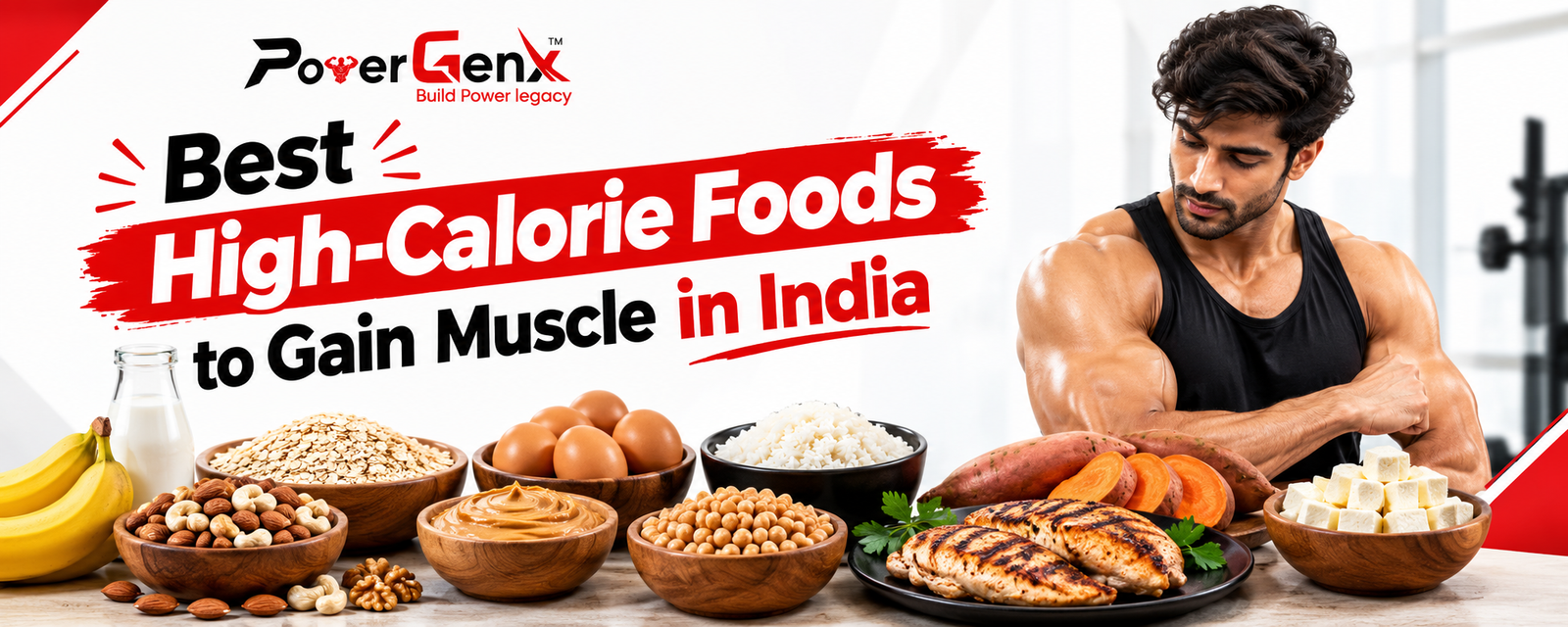
Most people who struggle to gain muscle are not short on gym effort. They are short on food, or they eat plenty of the wrong food. This guide covers the best bulking foods in India, how much of them you actually need, and how to fit them into everyday Indian meals, whether you are vegetarian or eat non-veg.
Quick Answer: What Are the Best Bulking Foods in India?
- Protein: eggs, chicken, fish, goat meat, paneer, milk, curd, dal, soya chunks
- Carbs: rice, roti, oats, banana, potato
- Calorie boosters: peanuts, peanut butter, almonds, ghee
Build every meal around a protein, add a carb, and use the boosters to cover the remaining calories.
How Many Calories Do You Need to Bulk?
Muscle grows when you eat more energy than you burn. Here is a simple three-step method.
Step 1: Estimate maintenance calories. Multiply your body weight (kg) by 30-35. A 65 kg person lands at roughly 1,950-2,275 kcal. Use the lower end if you are mostly sedentary and the higher end if you are very active.
Step 2: Add a small surplus. Start with 250-500 kcal above maintenance. Bigger surpluses mostly add fat, not extra muscle.
Step 3: Set your protein target. Aim for 1.6-2.0 g of protein per kg of body weight daily. For a 65 kg person, that is about 105-130 g per day.
Then track the result. A healthy gain is 0.25-0.5% of body weight per week, which is about 160-325 g for a 65 kg person. If you gain faster, trim 100-200 kcal. If the scale does not move for two to three weeks, add 150-250 kcal.
The 12 Best Bulking Foods in India
Values are approximate and vary by brand, recipe and cooking oil.
1. Whole Eggs (Non-Veg)
~75 kcal and 6 g protein per large boiled egg
Eggs are cheap, quick and flexible. Whole eggs give you more calories and nutrients than whites alone. Try an egg bhurji with roti, a masala omelette, or boiled eggs with oats.
Pro tip: Three to four whole eggs at breakfast is an easy 250-300 kcal and 20+ g of protein.
2. Chicken (Non-Veg)
~165 kcal and 31 g protein per 100 g cooked breast; ~210 kcal and 26 g protein for skinless thigh
Breast is the leaner, protein-dense option, while thigh adds calories and flavour. Pair either with rice and dal, or make a home-style chicken curry with roti. Chicken is a protein food first, so the calories come from the rice, roti and oil you cook it with.
3. Paneer (Veg)
~290-320 kcal and 18-20 g protein per 100 g full-fat
Paneer is one of the best vegetarian bulking foods because it delivers protein and calories together. Paneer bhurji, tikka, or palak paneer all work. Check the label, as protein and fat vary a lot between brands.
4. Whole Milk and Curd (Veg)
~150 kcal and 8 g protein per 250 ml cow milk; ~120-150 kcal and 7 g protein per 200 g curd
Liquid calories are easier to finish than another plate of rice. Blend milk with banana and oats, or have a bowl of curd with fruit and nuts. Buffalo milk and full-cream milk are more calorie-dense, which helps if your appetite is small.
5. Fish: Rohu, Mackerel, Sardine (Non-Veg)
~120-140 kcal and 17-20 g protein per 100 g cooked rohu; mackerel (bangda) is closer to 200 kcal
Skip expensive imported salmon. Local options such as rohu, catla, bangda, sardine and pomfret give you protein, plus omega-3s from the fattier fish. Fish and rice is a classic, easy-to-digest bulking meal in many Indian regions.
6. Goat Meat (Mutton) (Non-Veg)
~140 kcal and 27 g protein per 100 g cooked lean goat meat
Indian “mutton” is usually goat, which is leaner than lamb. It is rich in iron and B12. Restaurant curries can hide a lot of oil, so cook it at home when you can and keep portions moderate.
7. Dal, Rajma and Chana (Veg)
~230 kcal and 15-18 g protein per cooked cup, depending on the pulse
These are the backbone of a budget vegetarian bulk. Eaten with rice or roti, pulses and cereals complement each other’s amino acids and make a more complete protein. Rajma-chawal, chana masala with rice, and khichdi with curd are all good choices.
8. Soya Chunks and Tofu (Veg)
~170 kcal and 26 g protein per 50 g dry soya chunks
Soya chunks are among the most protein-dense and affordable foods in India. Soak them, squeeze out the water, then add to pulao, curry or wraps. Tofu is lighter in calories but works well in stir-fries and rice bowls.
9. Peanuts, Almonds and Peanut Butter (Veg)
~190 kcal and 7 g protein per 2 tbsp peanut butter; ~170 kcal per 30 g peanuts
Nuts pack lots of calories into small portions, which is ideal for hard-gainers who feel full quickly. Peanuts are the budget pick, and almonds are a pricier alternative. Measure portions, since a few extra handfuls can add 300-400 kcal without much notice.
10. Rice, Roti and Millets (Veg)
~205 kcal and 4 g protein per cooked cup of rice; ~100-120 kcal per medium roti
Carbs fuel your training and refill muscle glycogen. Rice is easy to eat in larger amounts, and an extra half cup is a simple calorie bump. Rotis from wheat, ragi or bajra add variety and fibre.
11. Oats and Banana (Veg)
~150 kcal and 5 g protein per 40 g dry oats; ~105 kcal per medium banana
Oats cooked in whole milk with banana and peanut butter turn into a 600+ kcal breakfast. Bananas also travel well, which makes them a good pre-workout or on-the-go snack.
12. Ghee (Veg)
~115 kcal per tablespoon, with almost no protein
Ghee is a calorie booster, not a protein source. A spoon on dal, rice or roti adds energy without adding bulk to your plate. Measure it, because it is easy to overdo.
Bulking Foods Comparison Table
| Food | Diet | Serving | Calories | Protein | Best For |
| Whole egg | Non-veg | 1 large | ~75 kcal | 6 g | Breakfast, snacks |
| Chicken breast | Non-veg | 100 g cooked | ~165 kcal | 31 g | Lean protein |
| Rohu fish | Non-veg | 100 g cooked | ~130 kcal | ~18 g | Light, everyday protein |
| Goat meat | Non-veg | 100 g cooked | ~140 kcal | 27 g | Iron-rich dinners |
| Paneer (full-fat) | Veg | 100 g | ~300 kcal | ~19 g | Protein + calories |
| Whole milk | Veg | 250 ml | ~150 kcal | 8 g | Shakes, bedtime |
| Chickpeas | Veg | 1 cup cooked | ~270 kcal | 14.5 g | Lunch, dinner |
| Soya chunks | Veg | 50 g dry | ~170 kcal | 26 g | Cheap protein |
| Peanut butter | Veg | 2 tbsp | ~190 kcal | 7 g | Easy calories |
| White rice | Veg | 1 cup cooked | ~205 kcal | 4 g | Carb base |
| Oats | Veg | 40 g dry | ~150 kcal | 5 g | Breakfast |
| Ghee | Veg | 1 tbsp | ~115 kcal | 0 g | Calorie booster |
Best Vegetarian Bulking Foods in India
You can build muscle on a vegetarian diet. You just need to be a little more deliberate, because plant proteins are generally less dense than meat, eggs and fish.
- Prioritise: paneer, soya chunks, milk, curd, dal, rajma and chana
- Pair cereals with pulses: rice with dal, roti with chana, to improve overall protein quality
- Add calorie boosters: peanut butter, nuts and a measured amount of ghee
- Watch vitamin B12: it is found mainly in animal foods and dairy, and deficiency is common among Indian vegetarians. Ask your doctor about testing.
Vegan or lactose intolerant? Use soya milk, tofu, soya chunks, pulses, peanuts and seeds. Curd and paneer are often better tolerated than milk, since they contain less lactose.
Bulking on a Budget
The cheapest foods are often the best ones. For protein per rupee, these usually win:
- Soya chunks
- Eggs
- Dal and chana
- Milk and curd
- Peanuts and peanut butter
- Rice, atta and oats bought in large packs
Reserve pricier foods like almonds, paneer and fish for a few meals per week.
Sample 3,000 kcal Indian Bulking Day (Vegetarian)
This is a sample for a lifter of roughly 70-80 kg. Adjust portions to your own target.
| Meal | What to Eat | Approx. kcal |
| Breakfast | 60 g oats cooked in 300 ml whole milk, 1 banana, 1 tbsp peanut butter | 610 |
| Mid-morning | 2 slices whole-wheat toast with 2 tbsp peanut butter | 350 |
| Lunch | 1.5 cups rice, 1 bowl dal, 100 g paneer sabzi, 100 g curd | 850 |
| Evening | 200 g curd, 30 g almonds, 1 fruit | 400 |
| Dinner | 3 rotis with 1 tsp ghee, soya chunk curry (50 g dry), sabzi | 680 |
| Bedtime | 250 ml whole milk with a few nuts | 200 |
| Total | ~3,090 kcal, ~140 g protein |
Non-veg swaps: Replace the paneer at lunch with 150 g chicken or fish, and add 3 eggs to breakfast. Replace the soya at dinner with egg curry or chicken.
Clean Bulk vs Dirty Bulk
A calorie surplus builds weight, but the food quality decides what kind. A “dirty bulk” built on samosas, biscuits, fried snacks, sweets and sugary drinks is easy to overeat and tends to leave you short on protein, fibre and micronutrients. In a well-known 2019 NIH trial of 20 adults, people given ultra-processed meals ate about 500 more kcal a day and gained weight over two weeks.
You do not need a perfect diet. Aim for around 80% whole foods and leave room for the occasional treat.
Do You Need Whey Protein or a Mass Gainer?
Not necessarily. Whole foods come first. Supplements help when your appetite is small or your schedule is packed.
- Whey protein adds protein (typically ~24-25 g per scoop) with few calories.
- Mass gainers add protein and a large amount of carbs. Many are mostly sugar or maltodextrin, so read the label.
Budget alternative: Blend 300 ml whole milk, 1 banana, 40 g oats and 2 tbsp peanut butter for a 600+ kcal shake.
7 Common Bulking Mistakes
- Gaining too fast. Faster gain usually means more fat, not more muscle.
- Ignoring protein. High calories with low protein will not build much muscle.
- Skipping carbs. Rice and roti fuel hard training.
- Eating mostly junk. It is easy to overeat and tough on your health markers.
- Not training progressively. Food supports growth, but lifting heavier over time triggers it.
- Drinking too much water before meals. It fills you up before you finish eating.
- Not tracking. Weigh yourself 3-4 times a week, take the weekly average, and note your waist measurement and strength numbers.
Who Should Be Careful With a High-Calorie Diet?
Talk to a doctor or registered dietitian first if you have chronic kidney disease, diabetes, PCOS, high cholesterol, thyroid problems, or a history of disordered eating. Also get checked if you are underweight or losing weight without trying, as the cause may be medical rather than dietary.
Frequently Asked Questions
What is the best food for bulking?
No single food wins. A strong bulking diet pairs protein (eggs, chicken, fish, paneer, dal, soya) with carbs (rice, roti, oats) and calorie boosters (nuts, peanut butter, ghee). Consistency matters more than any one ingredient.
How can I bulk in 7 days?
You cannot build real muscle in a week. A quick jump on the scale will mostly be water, glycogen and food weight. Aim for steady progress over 8-16 weeks with a small surplus and regular strength training.
Can I gain 20 kg in 3 months?
No, not safely or realistically. Most people gain roughly 0.25-1 kg of muscle per month. Forcing 20 kg in three months would be mostly fat and could harm your health.
What foods are good to buy in bulk for muscle gain?
Rice, atta, oats, dal, chana, rajma, soya chunks, peanuts, peanut butter, milk powder, eggs by the tray, and bananas. They are affordable, store well and work in many recipes.
Which vegetarian food is best for bulking in India?
Paneer for calories and protein, soya chunks for protein density, and dal, rajma and chana with rice for budget-friendly staples. Add milk, curd and peanut butter for easy extra calories.
How much protein do I need to build muscle?
Most active adults do well with 1.6-2.0 g per kg of body weight daily. For a 65 kg person, that is roughly 105-130 g.
Can I bulk without supplements?
Yes. Whole foods can cover your needs. Supplements only add convenience.
Should I avoid egg yolks while bulking?
Most healthy people do not need to. Yolks add calories and nutrients. If you have high cholesterol or a heart condition, follow your doctor’s advice.